
The Last Scared Ritual
Of all the unimportant things, football is the most important.

I’ve been trying to stitch together a few seemingly distant threads of my life: football, faith, and identity and it turns out, there is more connecting these threads than I thought.
This piece started to form in my mind when Jade and I went to Philadelphia a few weeks ago to watch Flamengo play Chelsea in the Club World Cup. What I expected to be a fun day of football turned into one of the most special days in recent memory for me. Flamengo, down early, came roaring back to win 3–1 in front of a packed, Brazilian-heavy crowd. The energy was electric, joyful chaos rooted in shared passion, identity, and history.
I met Flamengo fans who had flown in from Rio, driven from West Virginia, and perhaps most significantly, paid the stadium’s outrageous beer prices at over 100 Brazilian Reals per pour. The commitment was awe-inspiring and so was the community. By the time the third goal hit the net, I was bear-hugging strangers, soaked in sweat and joy, united by something far greater than the game.
And then there was the American Chelsea fan next to me. Disinterested and self-important he spent most of the match manexplaining the basics of the sport to his date and sulking once Chelsea fell behind. He left ten minutes before full time, having missed the plot entirely. It’s not the fact that he supported the other team that got to me it was the lack of reverence, the absence of faith in the moment, the idea that football is something you consume, not something you give yourself to.
There’s plenty to be said about the sporting merit of that Flamengo team, the structure of the Club World Cup, or the performance of individual players on the day. But others have covered that ground well. I’m more interested in what makes this game so spiritually potent and why that sacred essence is so often lost on American fans as this sport comes to prominence here.
Football was my first true love.
I’ve written about food, culture, even work, but rarely about the game that claimed my heart before all the rest. The afternoons I spent playing, whether on the grassy fields of Northern California or the hot concrete of my grandmother’s apartment complex in Copacabana, were some of the most vivid of my life. If I sit with those memories too long, they often bring me to tears.
What pulled me in wasn’t the competition. It was the presence. Football, then and now (when my body allows) is a meditative act for me. When I play, I don’t think about anything else. It’s just me, the ball, my teammates, and whoever stands between us and the goal. As a child, I was instinctively a quality player—gliding past defenders, and scoring goals with relative ease. When I surrendered to the rhythm of the game, it gave me everything and more in return.
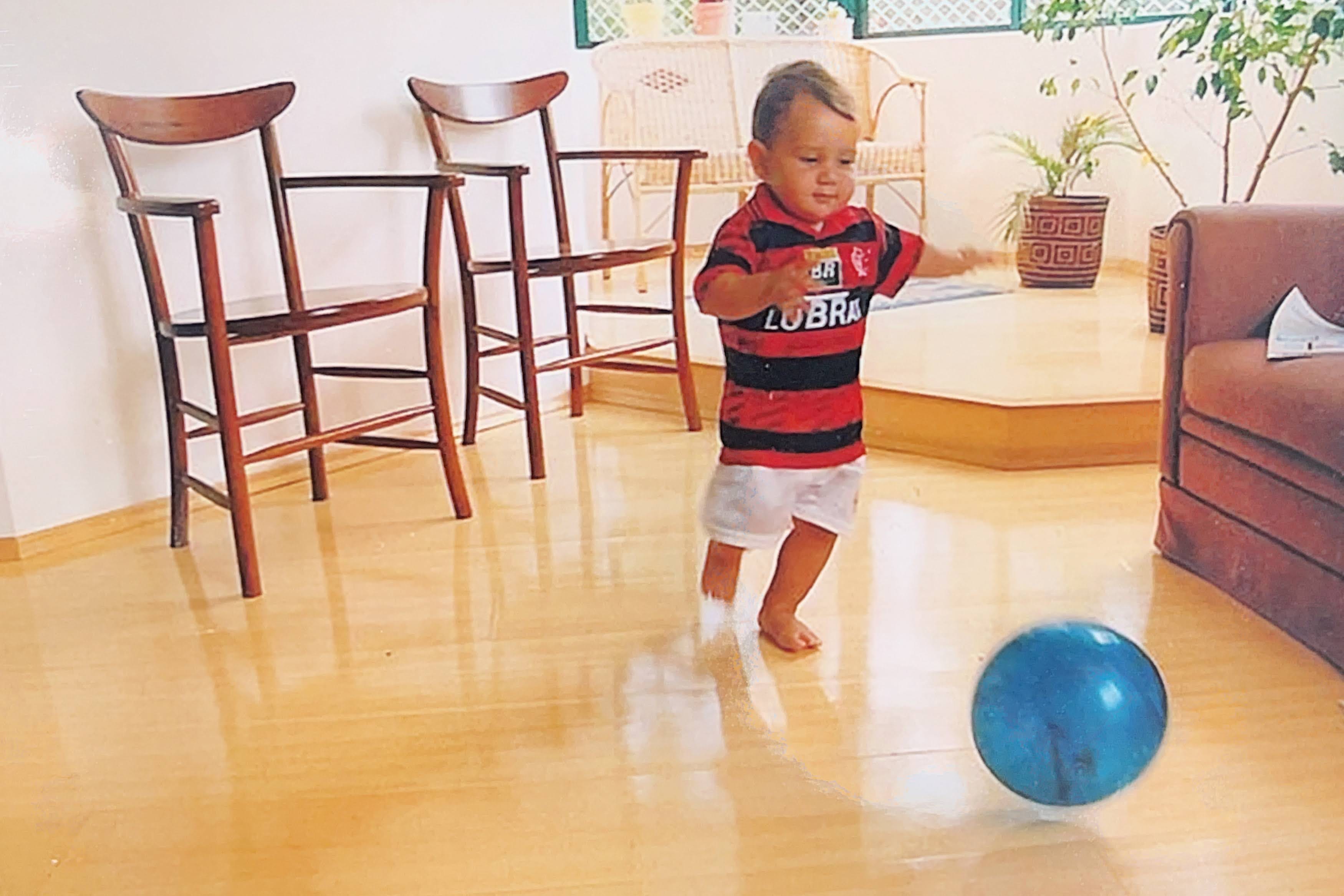
Watching football was just as sacred. In the early 2000s, this was surprisingly difficult to do in the U.S. My dad surprised me one year by adding the Spanish-language GolTV to our cable package. I’d spend weekend mornings locked in, watching whatever match I could get ahold of.
We weren’t a religious household—certainly not practicing. But many of my idols were. I started crossing myself before walking out on the field, mimicking the rituals I saw on TV. I even found myself a wooden cross necklace which I sported until my dad gently explained I didn’t understand what it meant. He was right. I didn’t know much about Christianity, but I knew the way my chest swelled when I stepped onto the pitch. In many ways football became my church.
In recent years, I’ve grown curious about and studied other religions—Christianity, Hinduism, Taoism—mostly through Western teachers like Ram Dass and Alan Watts. After the Philly match, I found myself relistening to their lectures and realizing just how closely their teachings mirrored some of what I’d gleaned through football. I wanted to expand on that today.
True Identity
As social media and modern politics (if there’s even a distinction anymore) pull us further into tribalism, I find that one of the most important truths we can awaken to is the unity behind our apparent separation.
“The balance that got off, was that we started out with this undifferentiated self, and we so well learned our separateness... that our separateness veiled over the connection we had to the unity of all things.” – Ram Dass
Football reminds me of the unity we were taught to move away from. In Philadelphia, after a strong start to the match, Wesley, Flamengo’s left back, struggled to clear an aerial ball that came to him around the half way line. His botched clearance ended up at Pedro Neto’s feet who was quickly in on goal, 1v1 with the keeper. Neto slotted home the chance and Chelsea went up 1-0 within 13 minutes. It would’ve been easy to scapegoat Wesley. But instead, the Flamengo faithful instantly roared louder. The beat of the bass drum never faltered. “Vamos virar, Mengo!” echoed from the stands—Let’s turn it around, Mengo—and in that moment, a smile came to my face knowing that we were in it together.
These stories are reflected off the pitch as well. I think of Rio, a city of breathtaking beauty and also inequality, where the poor live in the shadow of immense wealth. For many, Flamengo is more than a team, it’s hope. A reason to dream. MC Maneirinho, a prominent Carioca funk artist, was also at the match. Afterward, he posted a tearful video: “When I had nothing, my only happiness was this club.” Football can be joy amid difficulty, family when none is present, and faith when it feels like the world is crumbling. It’s community in its purest form if only we could all see that we’re members of one club.
Truth and Trust
Playing football is what first taught me, subconsciously then, consciously now, that we are guided by, and part, of something larger than ourselves. There were personal moments on the field I still can’t explain. A 25-yard free kick that bent into the top corner. A flick over my head, the defender’s too, landing perfectly at my feet as I spun around him. These weren’t calculated. They felt channeled.
Sure, there’s practice, technique, muscle memory. But I think many athletes will tell you: the magic happens when you’re not trying. When you let go.
Alan Watts said:
“In giving away the control, you got it… That’s to say, where you had a loving relationship to the world, you didn’t have to make up your mind what it should do. You let it decide.”
He continues:
“Now don’t you see that’s how your body works? You don’t have to make up your mind what your nerve cells are going to do. You delegated all that authority.”
It’s a paradox, but it’s the principle of unity. To become one with the universe, you must trust it. Trust that what appears as “Other” is also you.
It makes sense, then, that many of the world’s greatest players are deeply religious. Faith, in this sense, is an edge. As Lao Tzu said:
“The Great Tao flows everywhere… It nourishes all things, but does not lord it over them. And when merits are accomplished, it lays no claim to them.”
The more you relinquish control and trust the flow, the more powerful you become.
That got a little heady, I admit—but stay with me.
I believe football has the potential to teach us profound spiritual truths, to bring people together in ways few things can. But in the U.S., something’s been lost in translation. Football fandom here often feels transactional, individualistic. About being right. About being better.
That Chelsea fan I mentioned earlier? He wasn’t just annoying. He was an emblem of what happens when you engage with something sacred as though it’s just content to be consumed.
Contrast that with the South African supporters of Mamelodi Sundowns, who captured hearts and minds at the same tournament. They danced. They sang. They celebrated with rival fans. Win or lose, they honored the spirit of the game. Here’s a video of them partying with Fluminense fans shortly after being knocked out of the tournament.
Don’t get me wrong, there’s hope for the game in this country. In places like Oakland, where the Roots are building something beautiful and truly connecting football to community on American soil. But if the game is going to grow in a meaningful way here, and if the lessons of football are to really seep into American culture, it will require will take a shift in spirit, a movement away from the self importance that is so strongly enforced in each of us in this country.
Because football is not about being better than the opposite team or fanbase but about being better than our former selves.